
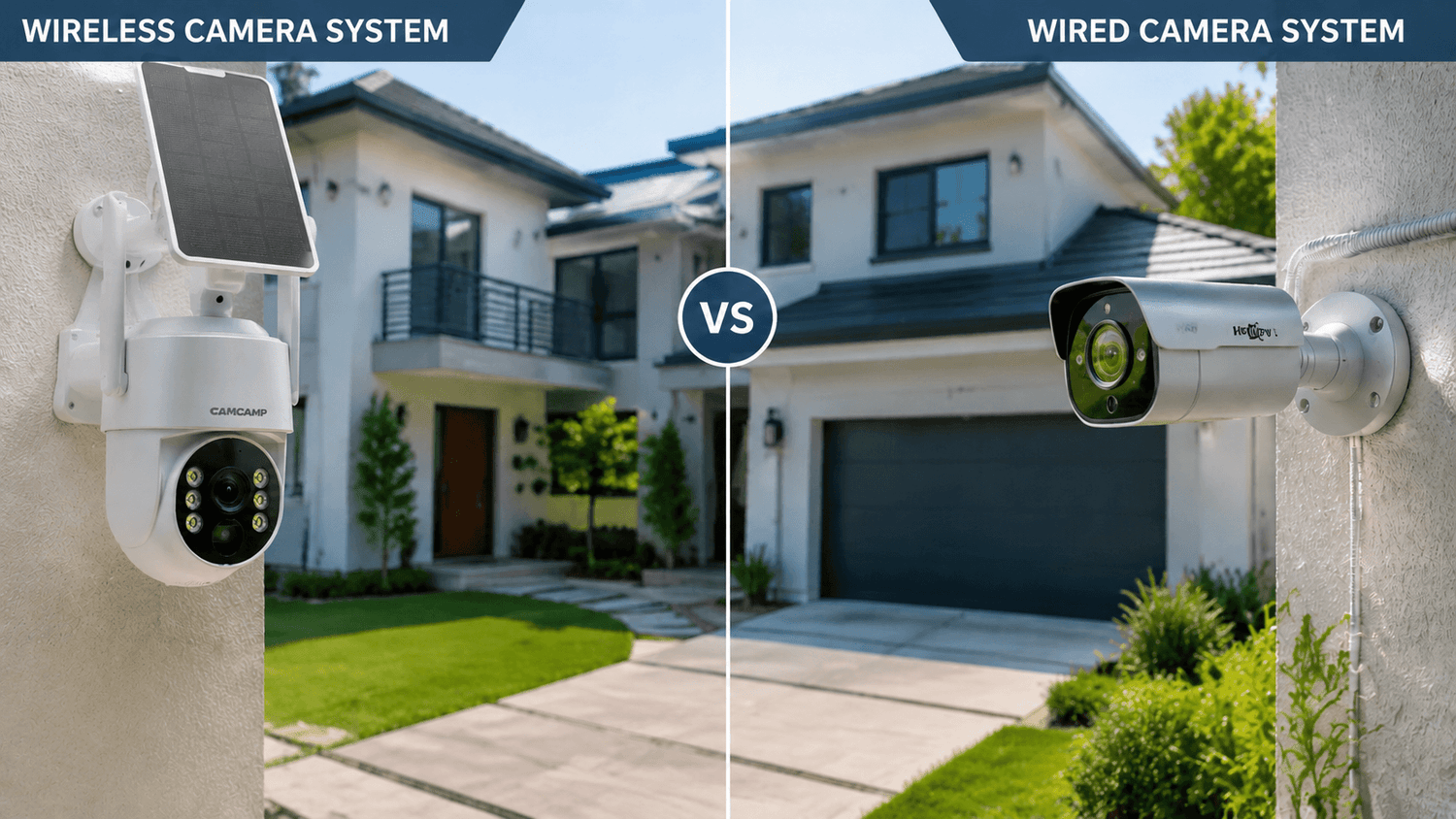
Home security has become more important than ever. Whether you're protecting your family, monitoring deliveries, or preventing property theft, choosing the right security camera system is one of the most important decisions you'll make.
One of the most common questions homeowners ask is:
Should I buy wireless security cameras or wired security cameras?
The answer depends on your property, budget, installation preferences, and security requirements.
In this guide, we'll compare wireless and wired security cameras in detail, including installation, image quality, reliability, cost, maintenance, and smart features. By the end, you'll know exactly which option is best for your home.
What Is a Wireless Security Camera?
A wireless security camera transmits video using WiFi or cellular networks instead of physical video cables.
Many modern wireless cameras are also battery-powered or solar-powered, making installation extremely simple.
Popular wireless security camera features include:
- WiFi connectivity
- Mobile app monitoring
- Motion detection alerts
- Cloud storage
- Solar charging
- Two-way audio
- AI human detection
- Remote viewing
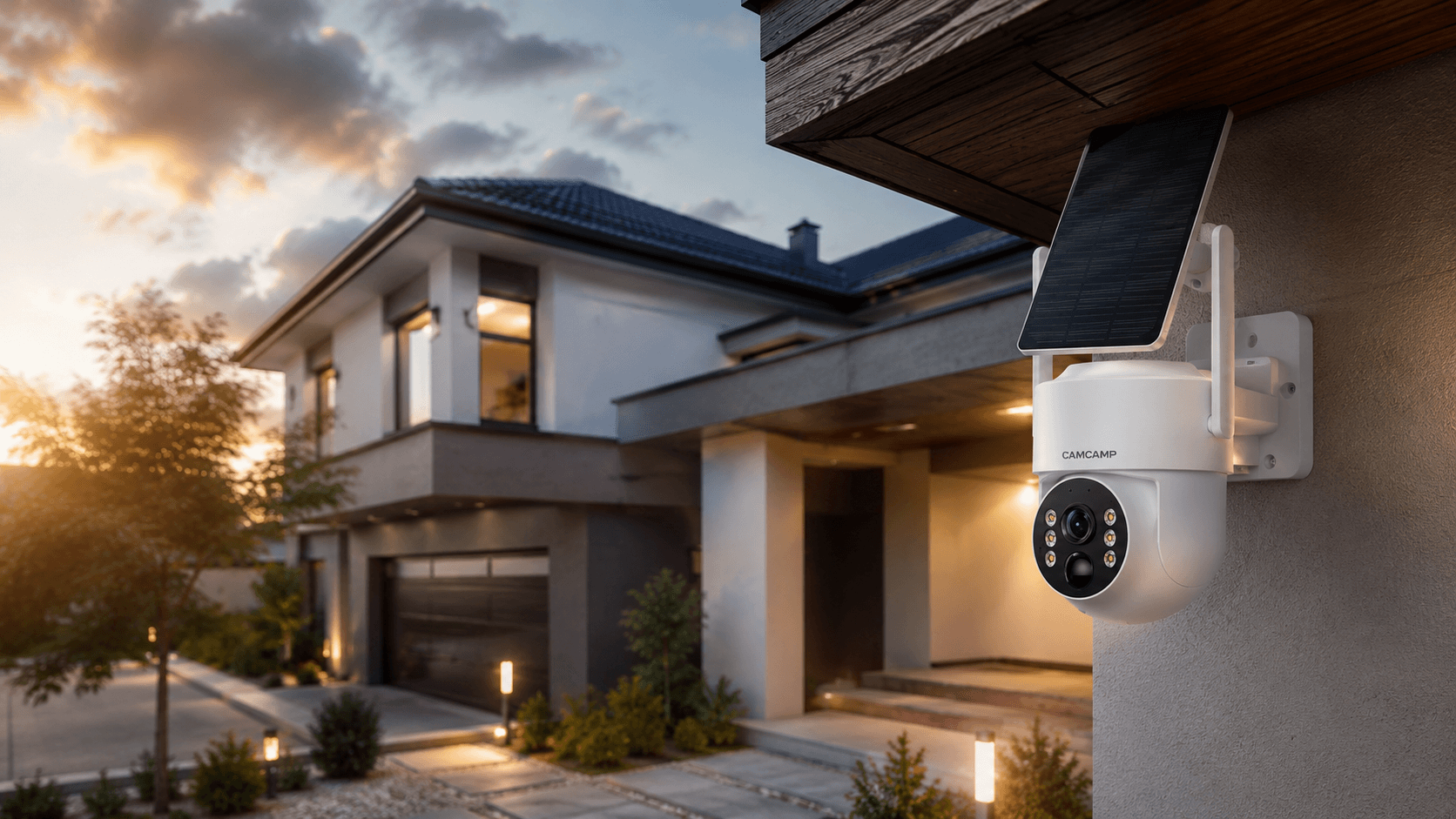
Camcamp wireless solar security cameras are designed to provide flexible protection without complicated wiring.

What Is a Wired Security Camera?
A wired security camera uses cables for power and video transmission.
These systems typically connect to:
- DVR (Digital Video Recorder)
- NVR (Network Video Recorder)
- Ethernet cables (PoE cameras)
Wired security systems are often used in:
- Large homes
- Businesses
- Warehouses
- Offices
- Commercial buildings
Since wired cameras maintain a physical connection, they often provide highly stable performance.

Wireless vs Wired Security Cameras: Side-by-Side Comparison
| Feature | Wireless Cameras | Wired Cameras |
|---|---|---|
| Installation | Easy | Complex |
| Mobility | Excellent | Limited |
| Reliability | Good | Excellent |
| Power Source | Battery/Solar | Continuous Power |
| Video Quality | Excellent | Excellent |
| Remote Access | Easy | Available |
| Maintenance | Battery Checks | Minimal |
| Expansion | Easy | More Difficult |
| Cost of Installation | Lower | Higher |
| DIY Friendly | Yes | Usually No |
Installation: Wireless Wins for Simplicity
Installation is one of the biggest differences.
Wireless Cameras
Wireless cameras can often be installed in minutes.
Benefits include:
- No drilling through walls
- No video cables
- DIY-friendly setup
- Flexible placement
A solar-powered wireless security camera can be mounted almost anywhere with sufficient sunlight.
Wired Cameras
Wired systems require:
- Running cables
- Drilling
- Professional installation (often)
- Additional hardware
Installation costs can significantly increase the total investment.
Winner: Wireless Cameras

Reliability: Wired Cameras Take the Lead
When reliability is the top priority, wired systems still have an advantage.
Because video and power are transmitted through physical cables:
- No WiFi interference
- Stable connection
- Consistent recording
- Reduced signal interruptions
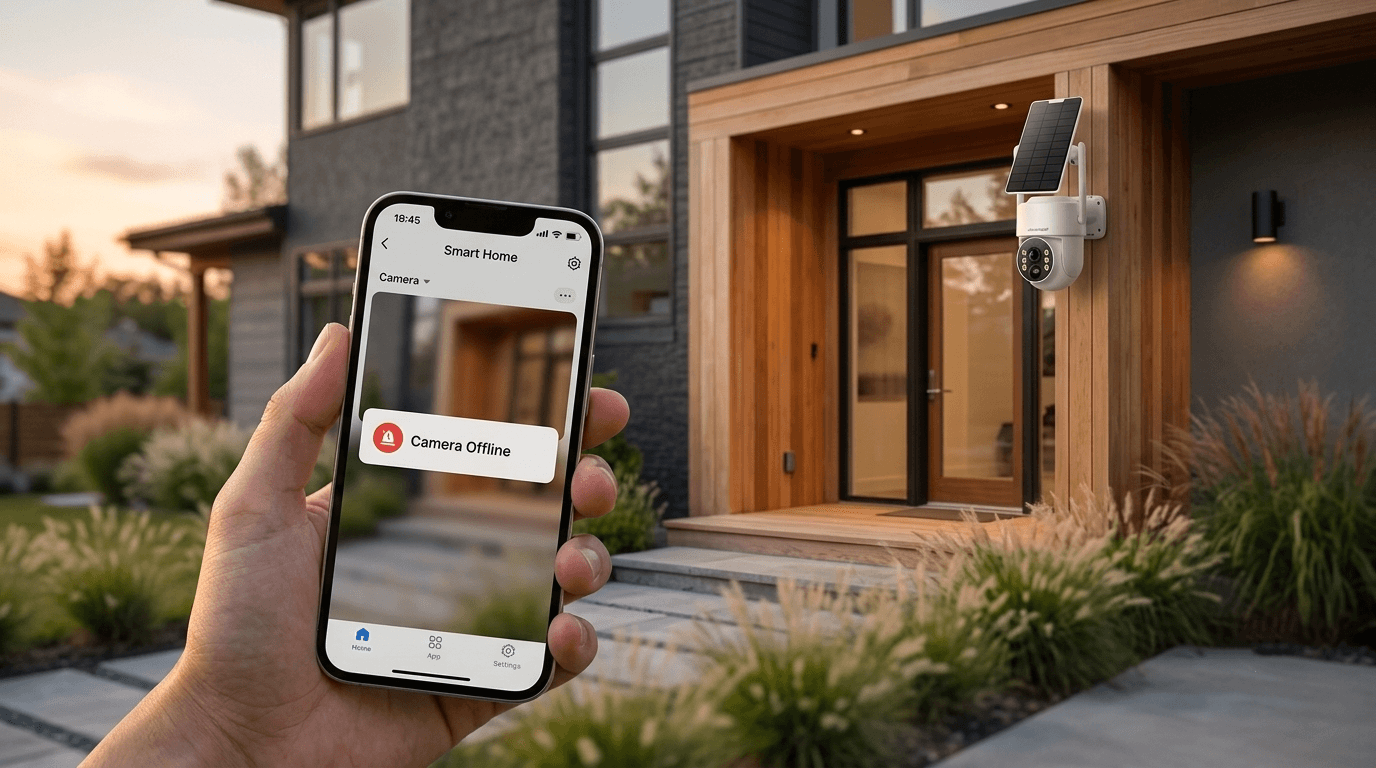
Wireless cameras can occasionally experience:
- Weak WiFi signals
- Network congestion
- Router outages
However, modern WiFi 6 technology has significantly improved wireless performance.
Winner: Wired Cameras
Image Quality: Nearly a Tie
Years ago, wired cameras offered much better image quality.
Today, wireless security cameras provide:
- 2K resolution
- 4MP video
- 5MP video
- 4K Ultra HD recording
Modern wireless cameras often rival professional wired systems.
For most homeowners, image quality differences are negligible.
Winner: Tie

Power Source Comparison
Wireless Security Cameras
Most wireless cameras use:
- Rechargeable batteries
- Solar panels
- Combination battery and solar systems
Advantages:
- Flexible placement
- No power outlet required
Potential drawbacks:
- Battery maintenance
- Reduced performance in prolonged cloudy weather
Wired Security Cameras
Advantages:
- Continuous power
- No battery charging
- 24/7 operation
Winner: Wired Cameras
Remote Monitoring and Smart Features
Modern homeowners want real-time alerts and mobile access.
Wireless cameras are typically designed with smart home integration in mind.
Features often include:
- Motion detection
- AI person detection
- Vehicle detection
- Package detection
- Smartphone notifications
- Alexa compatibility
- Google Assistant compatibility
Many wireless systems are built specifically for smart homes.
Winner: Wireless Cameras

Cost Comparison
Wireless Camera Costs
Typically lower because:
- No professional installation
- Minimal accessories
- Faster setup
Wired Camera Costs
Additional expenses may include:
- Cabling
- DVR/NVR systems
- Professional labor
- Maintenance
Winner: Wireless Cameras
Best Choice for Different Users
Choose Wireless Security Cameras If:
✔ You want DIY installation
✔ You rent your home
✔ You want solar-powered operation
✔ You need flexible placement
✔ You prefer app-based monitoring
✔ You want lower installation costs
Choose Wired Security Cameras If:
✔ You own a large property
✔ You require 24/7 continuous recording
✔ Maximum reliability is essential
✔ You don't mind professional installation
✔ Your network infrastructure already exists
Why More Homeowners Are Choosing Wireless Security Cameras in 2026
Recent advances in:
- Solar charging
- Battery technology
- AI detection
- WiFi performance
- Cloud storage
have made wireless security cameras more powerful than ever.
For most residential applications, modern wireless cameras deliver nearly all the benefits of wired systems while offering easier installation and greater flexibility.
This is why wireless home security cameras continue to dominate the consumer market.
Why Camcamp Wireless Security Cameras Stand Out
Camcamp wireless security cameras are designed for homeowners seeking reliable protection without complicated installation.
Key benefits include:
- Solar-powered operation
- Crystal-clear 2.5K and 4K video
- Smart motion detection
- Color night vision
- Two-way audio
- Weatherproof construction
- Mobile app control
- Easy DIY setup
Whether you're securing a front yard, driveway, garage, backyard, or vacation property, Camcamp offers a simple and effective solution.
FAQ
Are wireless security cameras as good as wired cameras?
Modern wireless security cameras can deliver similar video quality and smart features as wired cameras. Wired systems still offer slightly better reliability for continuous recording.
Do wireless security cameras need WiFi?
Most wireless security cameras require WiFi for remote viewing and alerts. Some models use cellular networks instead.
Are wireless security cameras easier to install?
Yes. Wireless cameras are generally much easier to install because they require fewer cables and can often be set up by homeowners.
Which security camera system is best for a home?
For most homeowners, wireless security cameras provide the best balance of convenience, affordability, and performance.
Can solar-powered security cameras work year-round?
Yes. Modern solar-powered cameras can operate year-round when installed in areas with adequate sunlight exposure.
What are the disadvantages of wired security cameras?
Wired cameras often require professional installation, extensive cabling, and higher upfront costs.
Conclusion
Both wireless and wired security cameras offer excellent security protection. However, for most homeowners in 2026, wireless security cameras provide the ideal combination of flexibility, affordability, smart features, and easy installation.
If you want hassle-free home security with modern AI-powered monitoring, a solar-powered wireless security camera system from Camcamp is likely the smartest choice.

Leave a comment
This site is protected by hCaptcha and the hCaptcha Privacy Policy and Terms of Service apply.