
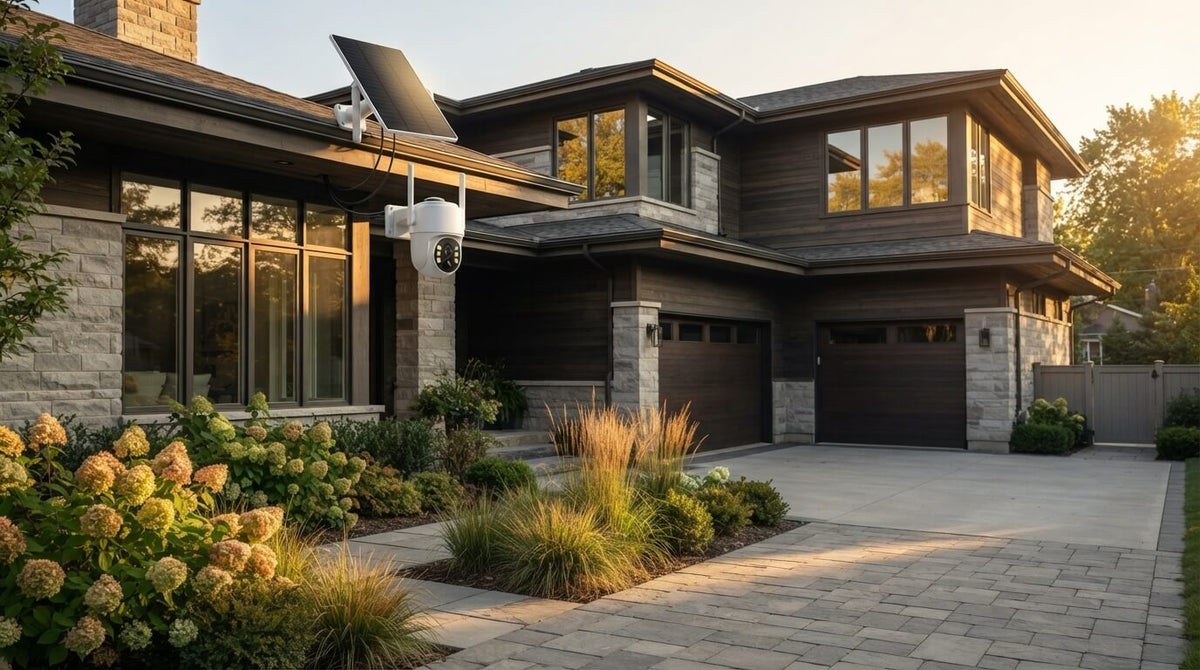
Outdoor home security has changed dramatically in recent years. Homeowners no longer have to rely only on wired CCTV systems or cameras that need to be installed near a power outlet. Solar security camera systems now provide a flexible way to monitor driveways, backyards, garages, gates, farms, and other outdoor areas without running long power cables.
But with so many solar powered security cameras, wireless outdoor cameras, battery security cameras, and smart surveillance systems available, how do you choose the right solution?
The best solar security camera system should offer more than solar charging. Important factors include video quality, motion detection, night vision, storage, installation flexibility, weather resistance, remote viewing, and whether the system requires monthly subscription fees.
For homeowners looking for a complete outdoor surveillance solution, a solar security camera system with an NVR can provide a particularly useful combination of wireless installation, local recording, and multi-camera monitoring.
What Is a Solar Security Camera System?
A solar security camera system combines a rechargeable battery-powered security camera with a solar panel. During daylight hours, the solar panel helps recharge the camera's battery, reducing the need to manually remove and recharge the camera.
Unlike traditional wired security cameras, a wireless solar security camera can be installed in outdoor locations where running electrical cables would be difficult or expensive.
This makes solar cameras useful for:
- Front doors and entrances
- Driveways and garages
- Backyards and patios
- Side gates and walkways
- Gardens and sheds
- Farms and rural properties
- Barns and storage areas
- Vacation homes and other remote properties
However, not every solar camera is designed the same way. Some are standalone Wi-Fi cameras that rely heavily on cloud services, while others are part of a complete wireless outdoor security camera system with local storage and an NVR.

What Should You Look for in the Best Solar Security Camera?
When comparing the best solar security cameras for outdoor use, consider the following features.
1. Reliable Solar Power
The biggest advantage of a solar powered security camera is reduced dependence on traditional power outlets.
Look for a system with a rechargeable battery and appropriately sized solar panel. Proper installation is important because the solar panel needs sufficient daylight exposure.
Solar power can be especially useful for areas where extending electrical wiring is inconvenient.
2. High-Resolution Video
Video resolution is another important consideration.
A camera with higher resolution can provide more visible detail when monitoring entrances, driveways, yards, and other outdoor areas. The Camcamp SC43 provides 4MP video at 2560 × 1440 resolution, giving homeowners a clearer image than traditional 1080p security cameras.
For outdoor surveillance, resolution should be considered together with lens coverage, lighting conditions, motion detection, and night vision.
3. Night Vision
A security camera needs to remain useful after sunset.
Modern outdoor security cameras may use infrared night vision, color night vision, or a combination of both. Color night vision can provide additional visual information when sufficient illumination is available, while infrared technology can help maintain visibility in darker conditions.
The Camcamp SC43 uses color night vision with built-in lighting to provide clearer nighttime footage.
If your main security concerns involve a driveway, backyard, garage, or entrance at night, make sure night performance is one of the features you compare.
4. Motion Detection and Smart Alerts
A good outdoor surveillance system should not record meaningless footage all day if motion-based recording is sufficient for your needs.
PIR motion detection allows the camera to respond when movement is detected. Smart detection zones can also help homeowners focus monitoring on important areas while reducing unnecessary alerts.
The SC43 supports PIR motion detection, customizable detection zones, instant alerts, and motion-triggered recording.
This can be particularly useful for monitoring driveways, front yards, gates, and entrances.
5. Local Storage and No Monthly Fees
One of the biggest differences between security camera systems is how video footage is stored.
Cloud-based cameras can be convenient, but some services require a monthly subscription for extended video history or advanced features.
A security camera system with NVR offers another approach. Instead of depending entirely on cloud storage, the NVR can store recordings locally.
The Camcamp SC43 includes a 500GB hard drive and a 10.1-inch NVR monitor. The system can be used for local viewing without requiring Wi-Fi for the basic camera-to-NVR connection.
For homeowners who want a no monthly fee security camera system, local storage can reduce recurring costs while keeping recorded footage available on-site.

Camcamp SC43: A Solar Security Camera System for Outdoor Home Security
For homeowners who need coverage across several outdoor areas, the Camcamp SC43 solar security camera system combines solar-powered wireless cameras with a dedicated NVR monitor.
The system is designed around several common outdoor security needs: flexible installation, local recording, nighttime monitoring, and multi-camera coverage.
The 10.1-inch NVR monitor supports up to 10 camera channels, allowing the system to expand as your security needs change. The included 500GB HDD provides local video storage, while the cameras can be viewed and controlled through the NVR and mobile app.
The cameras also support pan and tilt functionality, allowing users to adjust the viewing direction instead of relying on a completely fixed field of view.
For larger properties, this can make a multi-camera system more flexible than using several independent fixed cameras.
Where Should You Install Solar Security Cameras?
Correct placement is just as important as camera specifications.
Front Door
The front entrance is one of the most important locations for an outdoor security camera. Position the camera so that it can monitor approaching visitors while avoiding excessive direct sunlight into the lens.
Driveway
A driveway camera can help monitor vehicles, visitors, packages, and movement around the front of your property.
A PTZ solar security camera can be useful when you want to adjust the viewing direction or monitor a wider area.
Backyard
Backyards often have fewer existing power outlets, making solar powered outdoor security cameras particularly convenient.
Install the camera high enough to reduce tampering while maintaining a clear view of the areas you want to monitor.
Side Gates and Walkways
Side entrances can sometimes be overlooked when installing a home surveillance system. A wireless outdoor camera can provide coverage without requiring electrical wiring along the side of the house.
Garage, Shed, or Garden
Detached buildings can be difficult to connect to the home's electrical system. A solar security camera can provide an alternative where adequate sunlight is available.

Solar Security Cameras vs. Wired Security Cameras
Both solar and wired security cameras have advantages.
Solar security cameras are generally easier to install in locations without convenient electrical wiring. They are particularly suitable for outdoor areas, detached buildings, yards, gates, and remote property locations.
Wired security cameras, on the other hand, can provide a more consistent power source and may be better suited to installations that require continuous recording or locations where solar exposure is limited.
For many homeowners, the choice depends on the property layout, sunlight availability, desired recording mode, and installation requirements.

Do Solar Security Cameras Need Wi-Fi?
Not necessarily.
Some solar Wi-Fi security cameras depend on a home Wi-Fi connection for live viewing, cloud storage, and remote access.
However, certain NVR-based systems can maintain a direct wireless connection between the cameras and the NVR for local monitoring. With the Camcamp SC43, the camera-to-NVR connection can be used for local viewing without requiring an internet connection. Internet access is primarily needed for remote app access and related online functions.
This distinction is important when choosing a wireless solar security camera system for a property with weak Wi-Fi coverage.
How to Get Better Performance From a Solar Security Camera
Even the best solar camera needs proper installation.
First, position the solar panel where it receives sufficient daylight. Avoid placing the panel behind large trees, walls, or other permanent obstructions.
Second, keep the camera lens clean. Dust, water spots, and dirt can reduce image quality, especially at night.
Third, adjust the motion detection area. If the camera points toward a busy street, tree branches, or constantly moving objects, you may receive unnecessary alerts.
Finally, consider the areas that actually need protection. Instead of simply installing cameras wherever they are easiest to mount, identify important entry points and potential blind spots first.
Is a Solar Security Camera System Right for Your Home?
A solar powered security camera system can be a practical solution for homeowners who want outdoor surveillance without extensive wiring.
The combination of solar charging, rechargeable batteries, wireless installation, motion detection, night vision, local storage, and mobile access makes modern solar security cameras considerably more flexible than traditional outdoor cameras.
For larger properties, an NVR-based system such as the Camcamp SC43 adds another layer of convenience by combining multiple cameras, a dedicated 10.1-inch monitor, and 500GB local storage in one system.
Before choosing a system, consider your property's layout, sunlight conditions, required camera coverage, storage preferences, and whether you want local recording or cloud-based storage.
With the right placement and configuration, a solar security camera system for outdoor home security can provide a flexible way to monitor the areas that matter most—without turning your property into a maze of power cables.
Frequently Asked Questions
Are solar security cameras good for outdoor home security?
Yes. Solar security cameras can be particularly useful for outdoor locations where running power cables is difficult. Their effectiveness depends on sunlight availability, battery capacity, camera placement, motion settings, and weather conditions.
Do solar security cameras work at night?
Yes. Solar cameras store energy in their rechargeable batteries during daylight hours and can continue operating after sunset. Nighttime performance depends on the camera's night vision technology and available illumination.
Do solar security cameras need Wi-Fi?
Some do, but not all. Certain NVR-based solar security systems can provide local camera-to-NVR communication without requiring Wi-Fi for basic local monitoring.
Do solar security cameras require a monthly subscription?
Not necessarily. Systems with local NVR or microSD storage can provide local recording without a monthly cloud storage subscription. Always check the specific storage options of the camera system before purchasing.
Where is the best place to install a solar security camera?
Common locations include the front door, driveway, backyard, garage entrance, side gate, shed, and other important access points. The solar panel should be positioned where it can receive adequate daylight.
Can solar security cameras be used for large properties?
Yes. Multi-camera systems with an NVR can be useful for larger homes, farms, garages, driveways, and other properties that require coverage across several areas. Systems such as the Camcamp SC43 can support up to 10 camera channels.
Final Thoughts
The best solar security camera system is not necessarily the camera with the most features. It is the system that matches your property's power availability, coverage requirements, storage preferences, and outdoor environment.
For homeowners looking for a flexible wireless outdoor security camera system, solar-powered cameras can eliminate many of the installation limitations associated with traditional wired surveillance. When combined with an NVR, local storage, motion detection, and night vision, they can become a complete outdoor home security solution.
For homes, driveways, backyards, garages, and larger properties, the Camcamp SC43 offers a combination of solar power, 4MP video, PTZ coverage, color night vision, local 500GB storage, a 10.1-inch NVR monitor, and expandable multi-camera monitoring—making it a practical option for homeowners building a wire-free outdoor surveillance system.

Leave a comment
This site is protected by hCaptcha and the hCaptcha Privacy Policy and Terms of Service apply.