
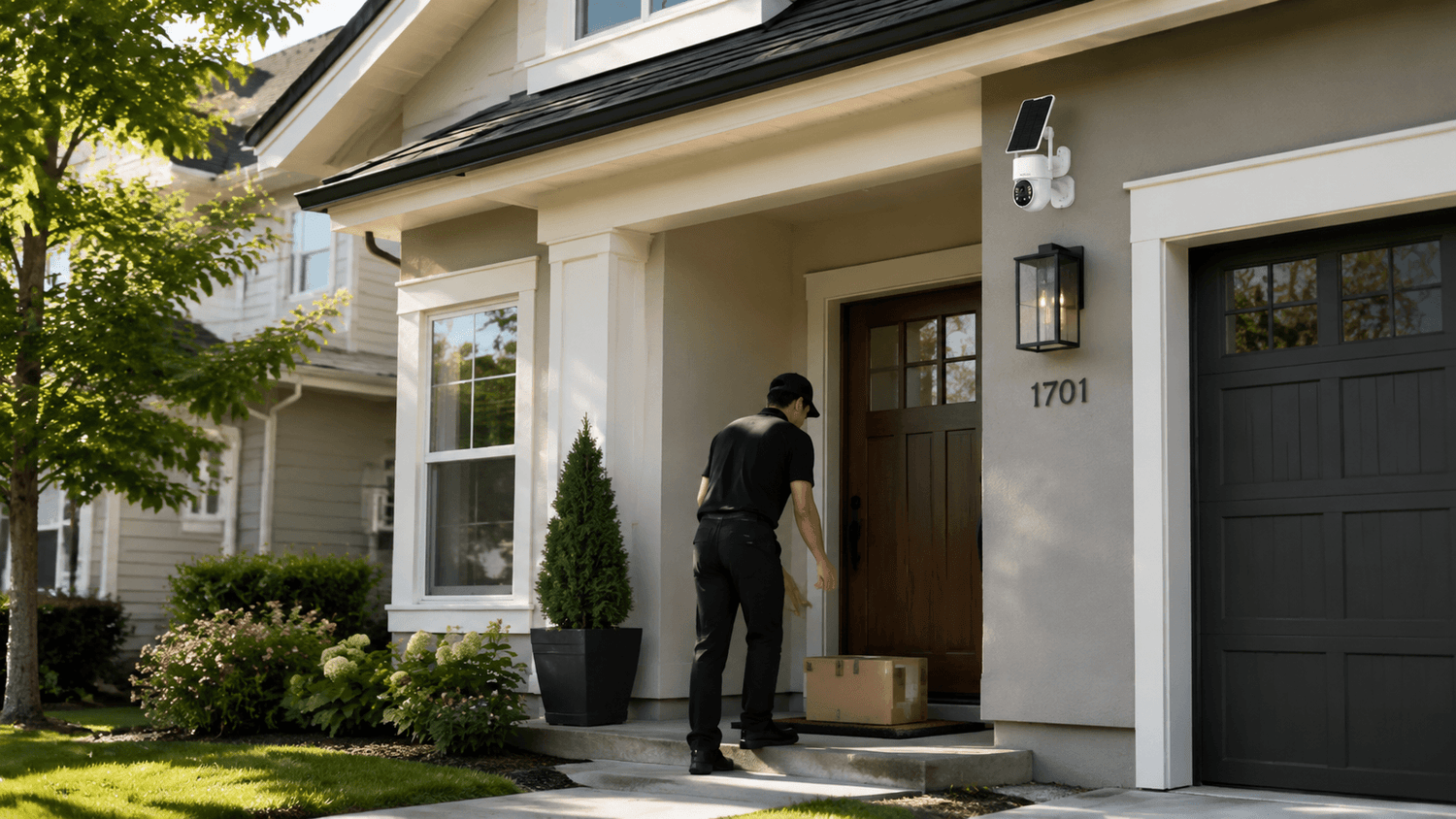
Home security starts with smart camera placement. Even the best outdoor security camera can't fully protect your property if it's installed in the wrong location. Whether you're trying to prevent package theft, monitor visitors, or secure your backyard, choosing the right installation points dramatically improves detection accuracy and reduces blind spots.
Modern wireless outdoor security cameras and solar security camera systems have made installation easier than ever. Without running long power cables, homeowners can position cameras exactly where they're needed most while enjoying AI motion detection, color night vision, and real-time alerts.
In this guide, we'll show you the best places to install outdoor security cameras around your home, explain why each location matters, and share expert installation tips to help you maximize your home's security.
Why Camera Placement Matters
Installing multiple cameras doesn't automatically mean better protection. Strategic placement provides wider coverage, captures clearer footage, and ensures important events aren't missed.
Proper camera positioning helps you:
- Reduce blind spots around your property
- Capture clear facial images of visitors
- Monitor package deliveries
- Deter burglars before they approach your home
- Improve AI human detection accuracy
- Reduce false motion alerts caused by trees, pets, or passing vehicles
Today's AI-powered outdoor security cameras, like the Camcamp SC43 Wireless Solar Security Camera System, combine intelligent motion detection with wireless installation, allowing homeowners to secure key areas without complicated wiring.
1. Install a Camera at the Front Door (Highest Priority)
The front door remains the most important place for an outdoor security camera. According to home security experts, most burglars either enter through the front entrance or approach it before looking for another access point.
A camera installed above or beside the front door helps you:
- Monitor visitors
- Record package deliveries
- Identify unfamiliar vehicles
- Capture facial details
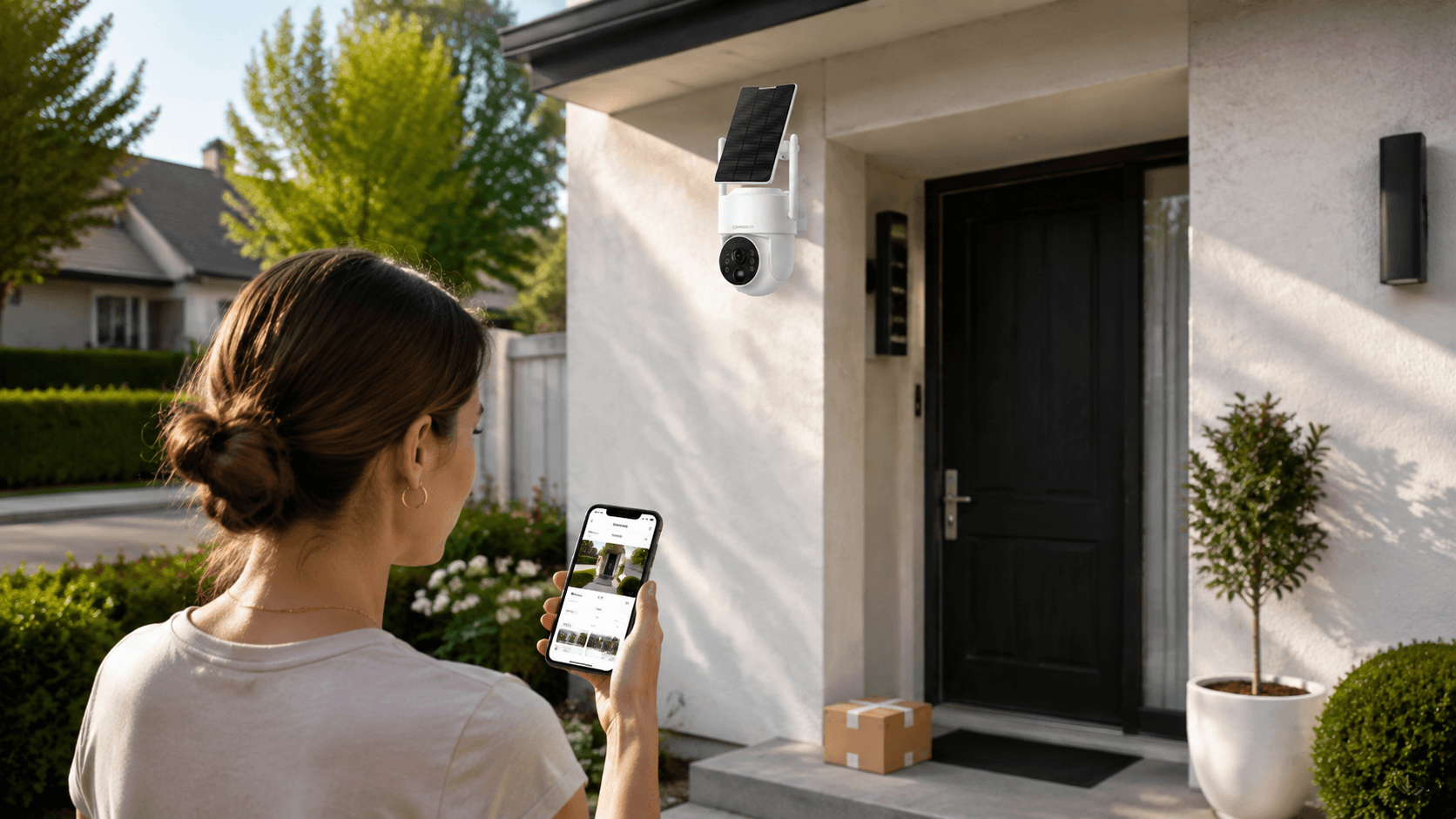
- Receive instant motion notifications
For the best results:
- Install the camera 8–10 feet (2.5–3 meters) above the ground.
- Angle it slightly downward.
- Avoid pointing directly toward the rising or setting sun.
- Make sure the doorway fills most of the viewing angle without blocking the lens.
A wireless outdoor security camera with AI person detection can distinguish people from animals or moving branches, significantly reducing false alerts.
2. Protect the Backyard
The backyard is one of the most overlooked areas of home security. While many homeowners focus on the front entrance, intruders often prefer entering through less visible areas behind the house.
Installing an outdoor camera overlooking your backyard helps monitor:
- Rear doors
- Patio entrances
- Sliding glass doors
- Swimming pools
- Outdoor storage
- Children's play areas
- Pets
A solar-powered outdoor security camera works especially well in backyard locations where access to electrical outlets may be limited.
If your property is large, installing multiple cameras with overlapping viewing angles helps eliminate blind spots while providing continuous coverage.

3. Monitor the Driveway and Garage
Your driveway is one of the busiest areas around your home. It's where vehicles are parked, guests arrive, and deliveries are often dropped off. A well-positioned outdoor security camera can help you monitor vehicle activity, deter theft, and capture important evidence if an incident occurs.
Installing a camera overlooking your driveway provides several benefits:
- Monitor parked vehicles 24/7
- Capture license plates when possible
- Record suspicious activity
- Receive instant motion alerts when someone enters your property
- Protect garages, workshops, and storage areas
For the best coverage:
- Mount the camera approximately 9–12 feet (2.7–3.7 meters) above the ground.
- Position it to cover both the driveway and garage entrance.
- Avoid pointing directly at reflective surfaces or vehicle headlights, which may affect nighttime image quality.
- If available, enable AI vehicle detection to receive more relevant alerts.
A camera with 2.5K resolution, color night vision, and AI motion detection, such as the Camcamp SC43, provides clearer details when identifying vehicles and visitors in low-light conditions.

4. Secure Side Entrances and Walkways
Many homeowners forget about the narrow spaces between houses, but these side entrances are common access routes for burglars because they're often hidden from neighbors and street traffic.
Installing wireless outdoor security cameras along side paths provides early detection before someone reaches your backyard or rear entrance.
Ideal locations include:
- Side gates
- Narrow walkways
- Garden paths
- Utility entrances
- Fence openings
When positioning the camera:
- Keep it high enough to prevent tampering.
- Angle it toward the direction people are likely to walk.
- Avoid placing it directly behind trees, bushes, or decorative plants that could block the view or trigger unnecessary motion alerts.
- If possible, overlap the camera's field of view with another camera for seamless coverage.
Modern AI-powered security cameras can accurately distinguish between people, pets, and moving vegetation, helping reduce false alarms while ensuring important events are recorded.

Expert Tips for Better Outdoor Camera Installation
No matter where you install your cameras, following a few best practices can significantly improve overall performance and image quality.
Install Cameras High Enough
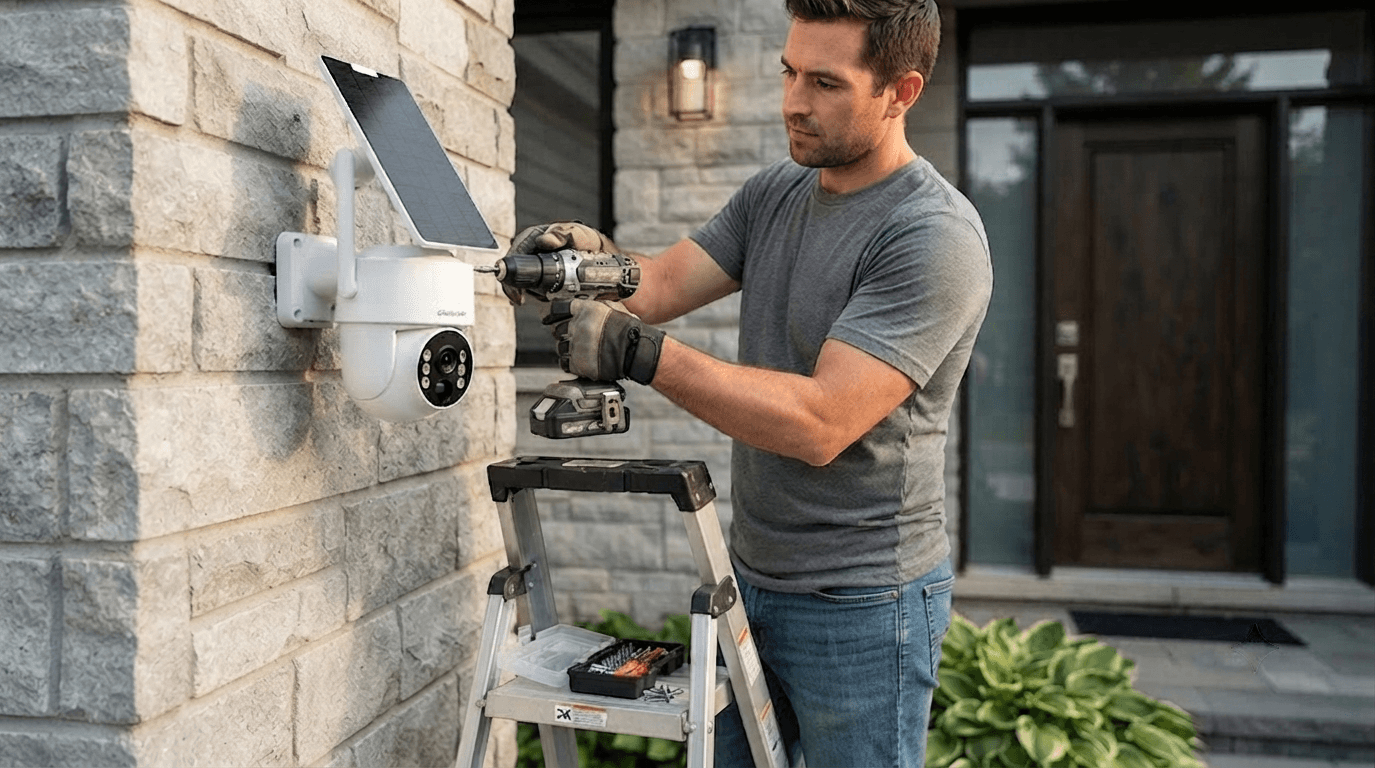
Mount outdoor security cameras approximately 8–10 feet (2.5–3 meters) above the ground. This height offers a wider viewing angle while making the camera more difficult to tamper with.
Avoid Direct Sunlight
Facing a camera directly toward sunrise or sunset can create glare and overexposed footage. Position cameras so sunlight comes from the side whenever possible.
Minimize Blind Spots
Walk around your property after installation and verify that all major entry points are visible. Consider overlapping camera coverage in high-risk areas such as front entrances and driveways.
Ensure Reliable Connectivity
For wireless systems, make sure each camera maintains a strong Wi-Fi signal. If using a solar-powered security camera, install the solar panel where it receives several hours of direct sunlight each day to maximize battery performance.
Use AI Motion Detection
Enable AI human detection and customizable motion zones to reduce unnecessary notifications from passing cars, pets, or swaying branches. This helps ensure that alerts focus on meaningful activity rather than everyday background movement.


Leave a comment
This site is protected by hCaptcha and the hCaptcha Privacy Policy and Terms of Service apply.