
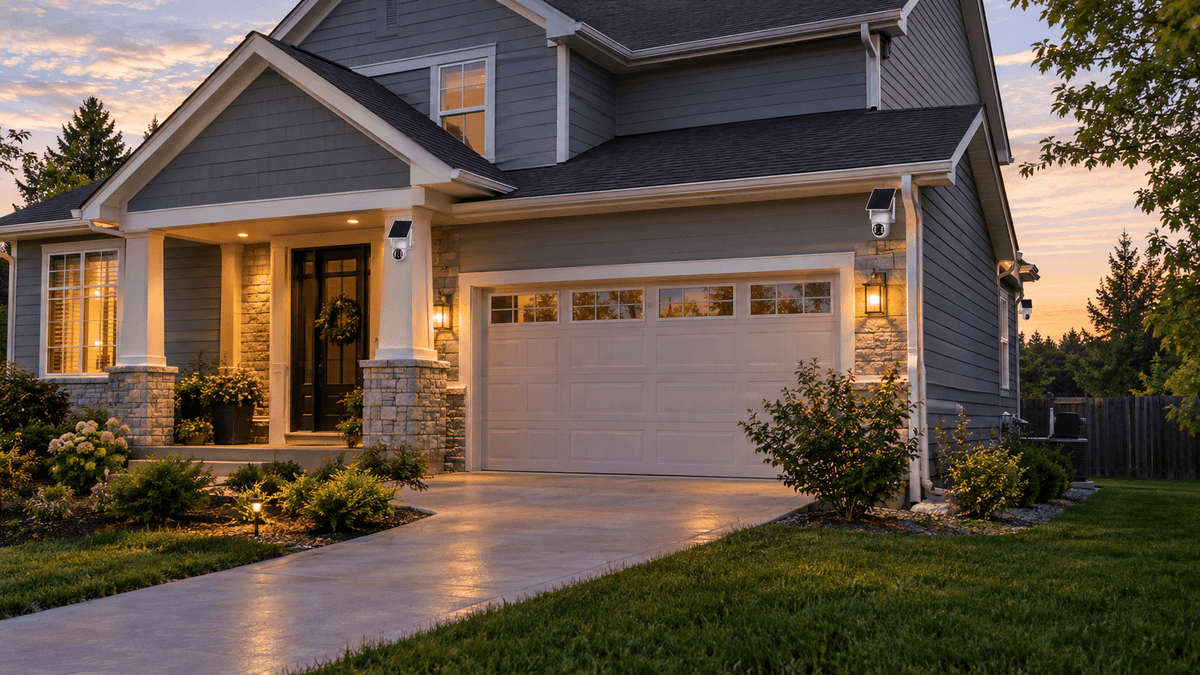
Installing outdoor security cameras is one of the most practical ways to improve your home security. However, even the best outdoor security camera cannot provide effective coverage if it is installed in the wrong location.
So, where should you install security cameras around your home?
The most important areas are usually the front door, driveway, garage, backyard, side entrances, and other access points around your property. Proper security camera placement can help reduce blind spots, capture important activity, and give you a clearer view of what is happening around your home—both during the day and at night.
In this guide, we’ll explain where to install outdoor security cameras, how high to mount them, what areas to prioritize, and how to choose the right type of camera for different locations.
Whether you're installing a wireless security camera, solar security camera, or a complete wireless security camera system, these placement tips can help you build more effective home surveillance.
Where Should You Install Outdoor Security Cameras?
The best security camera placement depends on the layout of your home and the areas you want to monitor. In most homes, you should prioritize locations where people are most likely to enter, exit, or approach the property.
The six most important areas include:
- Front door and porch
- Driveway
- Garage
- Backyard
- Side entrances
- Gates and other access points
Instead of installing cameras randomly, think about your property as a series of entry and movement zones. A well-planned home security camera system should cover these zones while minimizing blind spots.
1. Front Door and Porch
Your front door should usually be one of the first places to install an outdoor security camera.
A large percentage of visitors, deliveries, and unexpected activity happen around the main entrance. A camera positioned near the front door can provide a clear view of people approaching the house, packages being delivered, and activity around the porch.
For the best view, install the camera high enough to reduce the chance of tampering while keeping the entrance area visible.
A wireless outdoor security camera can be especially convenient for homes where running cables to the front entrance is difficult.
Recommended keywords: front door security camera, outdoor door camera, home security camera, wireless security camera.
2. Driveway
The driveway is another important location for outdoor security camera installation.
A driveway camera can monitor vehicles approaching your property and provide visibility over a large outdoor area. If your driveway connects directly to the street, positioning the camera to capture the main approach can help you see activity before someone reaches your home.
Avoid pointing the camera directly toward strong sunlight whenever possible. Glare can reduce image quality and make it harder to identify people or vehicles.
For larger driveways, consider a camera with a wide viewing angle or PTZ security camera functionality. A camera that can pan, tilt, or zoom may provide greater flexibility when monitoring a larger area.

3. Garage
Garages are often overlooked when planning home surveillance, but they can be an important security zone.
A garage camera can monitor the driveway, garage door, and surrounding area. If your garage is detached from the main house, it may deserve its own dedicated camera.
For an attached garage, you can position an outdoor camera under the roofline so that it covers both the garage entrance and the driveway.
A camera with motion detection, night vision, and wide-angle coverage can be particularly useful in this location.
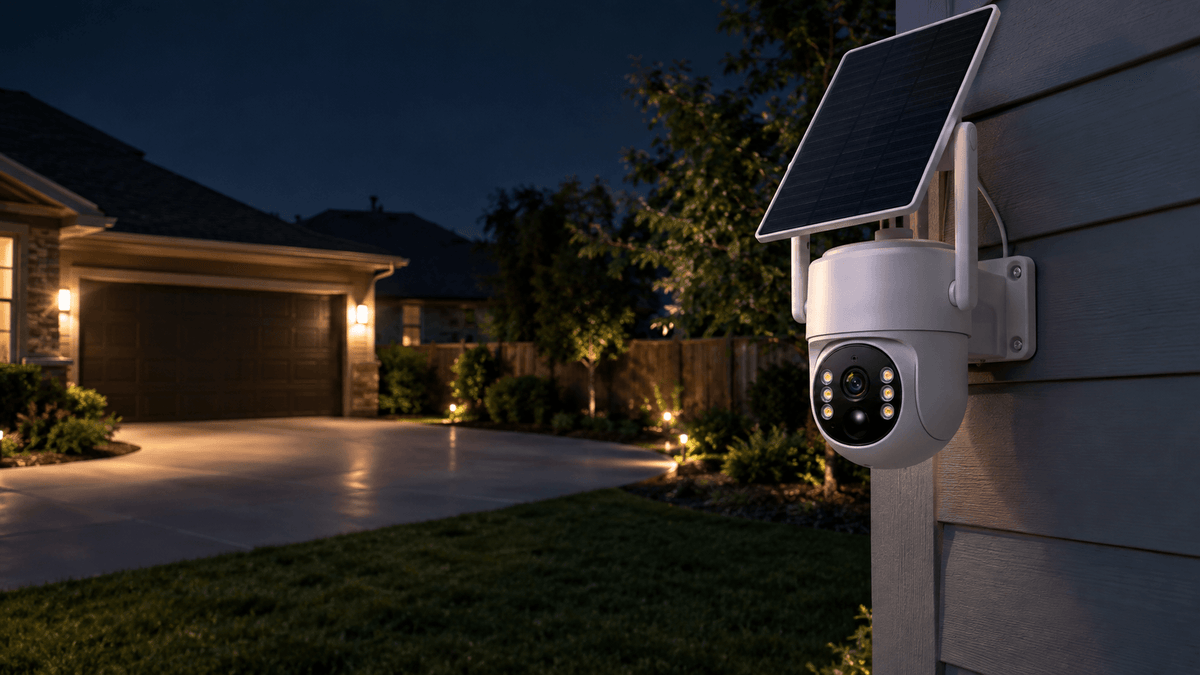
If there is no convenient electrical outlet near the garage, a solar-powered security camera can reduce the need for complicated wiring. Solar cameras can be especially useful for detached garages, sheds, workshops, and other outdoor structures.
4. Backyard
Your backyard may have fewer visitors than your front entrance, but it can still create a security blind spot.
Backyards often contain doors, windows, sheds, outdoor equipment, pools, or other valuable property. Installing an outdoor security camera overlooking the backyard can help monitor these areas.
When installing a backyard camera, avoid placing it too close to trees or large objects that can block the view. Seasonal changes should also be considered. A camera that has a clear view in winter may become partially blocked by leaves during summer.
For areas without a nearby power source, a solar security camera can be a practical option.
A solar-powered camera can use sunlight to help maintain its battery while avoiding the need for long power cables. This makes solar security cameras particularly suitable for backyards, gardens, fences, and remote corners of a property.

How High Should Outdoor Security Cameras Be Mounted?
Camera height has a major effect on image quality and security.
As a general guideline, outdoor security cameras are often installed around 7 to 10 feet above the ground, depending on the camera's field of view and the property layout.
Mounting a camera too low can make it easier for someone to reach or damage. However, installing it too high can make faces and other important details appear too small.
The goal is to find a balance between:
- Security
- Field of view
- Facial visibility
- Motion detection
- Protection from tampering
Before permanently mounting the camera, test the viewing angle from the planned location.

Avoid These Common Security Camera Placement Mistakes
Good placement isn't only about where you install cameras. It's also about avoiding locations that create poor coverage.
Don't Point Cameras Directly at the Sun
Direct sunlight can cause glare and overexposure. Whenever possible, position cameras so that the lens isn't facing the strongest source of sunlight.
Don't Install Cameras Behind Glass
Using an outdoor camera behind a window can cause reflections and interfere with infrared night vision.
If you need outdoor monitoring, installing a weather-resistant security camera outside the building is generally more effective.
Don't Block the Lens
Trees, walls, roof structures, decorations, and other objects can create blind spots.
Before installation, check the camera's entire field of view—not just the area directly in front of the lens.
Don't Aim Only at the Ground
A camera angled too far downward may capture a large amount of pavement while missing important details such as faces, vehicles, or activity approaching the property.
Don't Ignore Nighttime Conditions
A location that looks perfect during the day may perform differently at night.
Consider streetlights, porch lights, shadows, reflective surfaces, and the camera's night vision capabilities when choosing a location.
Consider Night Vision When Choosing Camera Placement
Outdoor security cameras need to work in different lighting conditions.
If your goal is 24/7 home surveillance, look for features such as:
- Infrared night vision
- Motion detection
- Low-light imaging
- HD or 2K/4K video
- Wide-angle viewing
- AI detection
- Weather-resistant housing
The camera should be positioned so that its night vision isn't constantly affected by nearby walls, reflective surfaces, or bright lights.
For example, installing a camera directly opposite a bright outdoor lamp may cause excessive exposure or reflections.

Wireless vs. Wired Outdoor Security Cameras
When planning security camera installation, you should also consider whether you need a wired or wireless system.
A wired security camera system can provide a stable connection and is often suitable for permanent installations where power and network cables are easy to run.
A wireless security camera offers more flexibility during installation because it doesn't require the same amount of cabling.
For locations where running power cables is difficult, a solar wireless security camera can be an even more flexible option.
For example, the Camcamp SC43 Wireless Solar Security Camera System combines wireless outdoor cameras with a local NVR monitor and storage, making it suitable for homeowners who want to monitor multiple areas around a property without relying entirely on traditional wired installation.
For larger properties, a multi-camera system can make it easier to monitor the front door, driveway, backyard, and other important areas from one system.
How Many Outdoor Security Cameras Do You Need?
There isn't one correct number for every home.
A small property may only need cameras covering the front entrance, driveway, and backyard. A larger property with multiple entrances, a detached garage, side gates, or large outdoor areas may require additional cameras.
Instead of choosing the number of cameras first, start by identifying your property's potential blind spots.
Ask yourself:
- Where can someone enter the property?
- Which areas are hidden from the street?
- Which doors and windows need monitoring?
- Where are valuable vehicles or outdoor equipment located?
- Which areas are difficult to see from inside the house?
- Which locations have limited access to electrical power?
Once these areas are identified, you can determine the number and type of cameras required.
Create a Complete Home Security Camera Plan
The most effective outdoor security camera setup usually combines several viewing angles rather than relying on one camera.
A basic layout could include:
Front Door → Monitor visitors and deliveries.
Driveway → Monitor approaching vehicles and outdoor activity.
Garage → Monitor garage doors and surrounding areas.
Backyard → Cover rear entrances and outdoor spaces.
Side Entrance → Monitor less visible access points.
Gate → Monitor people entering or leaving the property.
This approach helps create overlapping coverage and reduces the chance of important areas being hidden from view.
Final Thoughts
Choosing the right outdoor security camera placement is just as important as choosing the camera itself.
Start with the most important access points around your home, including the front door, driveway, garage, backyard, side entrances, and gates. Install cameras at a practical height, avoid direct sunlight and obstructions, and consider how the camera will perform after dark.
If running power cables is difficult, a wireless solar security camera system can provide greater installation flexibility. For larger properties, a multi-camera system can help create broader coverage and reduce blind spots.
Most importantly, don't simply install cameras where they are convenient. Plan your home security camera system around the areas that matter most.
With thoughtful placement and the right combination of wireless security cameras, solar security cameras, motion detection, night vision, and local video storage, you can create a more comprehensive outdoor surveillance setup for your home.

Leave a comment
This site is protected by hCaptcha and the hCaptcha Privacy Policy and Terms of Service apply.