
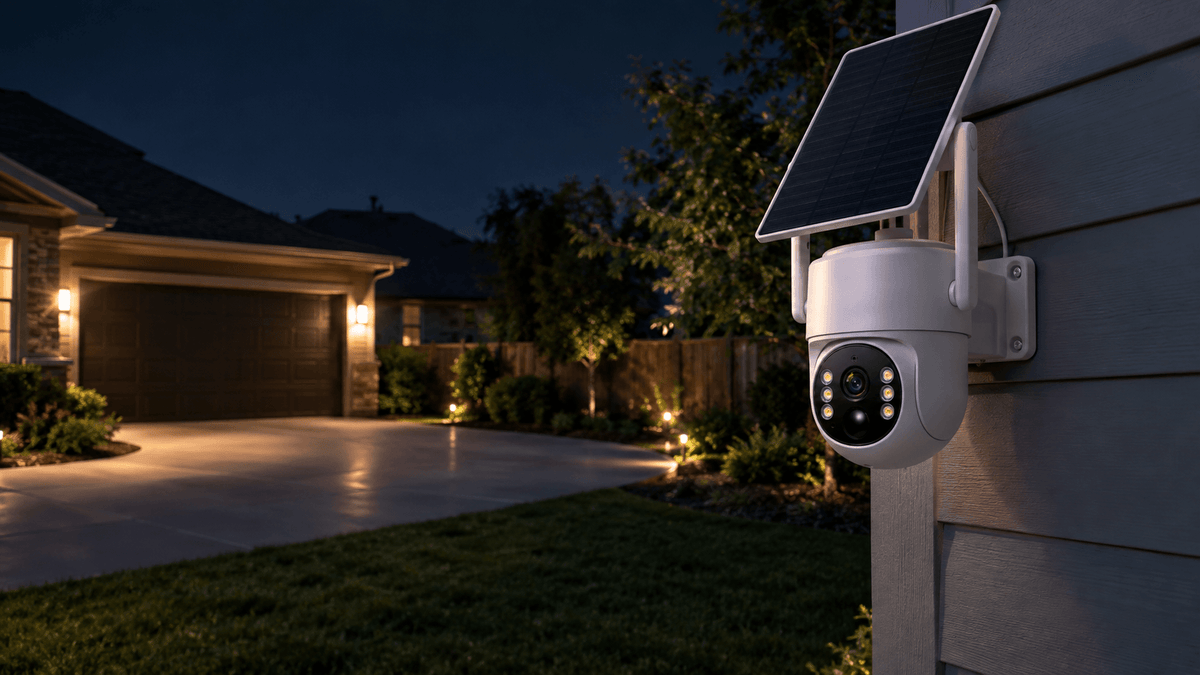
When choosing a security camera for your home, property, driveway, backyard, farm, or business, daytime image quality is only part of the equation. A reliable security camera night vision system is just as important because many security events happen after dark.
Modern security cameras use several different technologies to capture video at night, including infrared (IR) night vision, color night vision, low-light sensors, white-light illumination, and smart image processing. Understanding the differences can help you choose the right camera for your environment.
In this guide, we'll explain how security camera night vision works, compare IR and color night vision, discuss night vision range, and show you what to look for when choosing an outdoor security camera.
What Is Security Camera Night Vision?
Security camera night vision refers to a camera's ability to capture usable video in low-light or completely dark environments.
Unlike a standard camera, a night vision security camera uses specialized sensors, infrared LEDs, visible light, or image-processing technology to produce an image when there isn't enough natural light.
Depending on the camera, nighttime footage may appear:
- Black and white
- Full color
- Low-light color
- Infrared-enhanced
- Automatically switched between color and infrared modes
For outdoor surveillance, night vision is particularly important for monitoring driveways, entrances, backyards, garages, farms, warehouses, and other areas that may have little or no lighting.
How Does Security Camera Night Vision Work?

Most modern night vision security cameras rely on one or more of three technologies: infrared illumination, low-light image sensors, and visible-light illumination.
1. Infrared (IR) Night Vision
Infrared night vision is one of the most common technologies used in security cameras.
IR LEDs emit infrared light that is invisible or nearly invisible to the human eye. The camera's image sensor can detect this light and use it to create a visible image.
Because infrared illumination does not require visible light, an IR security camera can continue recording even in very dark environments.
Most traditional IR night vision footage appears in black and white.
This provides several advantages:
- Works in very low light
- Can work in complete darkness
- Doesn't require external lighting
- Helps reduce visible light pollution
- Suitable for outdoor surveillance
- Usually provides consistent nighttime monitoring
However, traditional IR night vision cannot provide natural colors because the camera is primarily detecting infrared wavelengths rather than visible light.
2. Color Night Vision
Color night vision security cameras are designed to retain color information in low-light environments.
Instead of relying only on infrared illumination, these cameras typically use highly sensitive image sensors, image processing, and sometimes supplemental white light to capture more visible-light information.
Color night vision can provide additional details such as:
- Clothing colors
- Vehicle colors
- Signs and markings
- Objects and surroundings
- Landscape details
For example, if a person enters your driveway at night, a black-and-white IR image may show their shape and movement clearly. A color night vision camera may also help identify the color of their jacket or vehicle.
The tradeoff is that color night vision generally performs best when some ambient light is available, such as streetlights, porch lights, moonlight, or supplemental illumination.

IR vs. Color Night Vision: What's the Difference?
The biggest difference between IR and color night vision is how they handle limited light.
| Feature | IR Night Vision | Color Night Vision |
|---|---|---|
| Image color | Usually black and white | Color |
| Complete darkness | Excellent | Depends on illumination |
| Identifying colors | Limited | Better |
| Power consumption | Generally efficient | May vary |
| Outdoor monitoring | Excellent | Excellent |
| Visible illumination | Usually unnecessary | May use white light |
| Low-light detail | Good | Excellent when sufficient light exists |
There isn't one universally better technology.
If your property becomes completely dark at night, infrared night vision is often the safer choice.
If there is ambient lighting and identifying colors is important, color night vision can provide more useful information.
For some properties, a security camera that automatically switches between color and IR modes offers the best balance.
Can Security Cameras See in Complete Darkness?
Yes. Many infrared security cameras can see in complete darkness because they use infrared LEDs to illuminate the scene.
However, "seeing in the dark" does not mean that every camera can produce the same image quality.
Several factors affect nighttime performance:
- IR LED power
- Image sensor sensitivity
- Lens aperture
- Camera resolution
- Image-processing algorithms
- Weather conditions
- Distance between the camera and subject
- Reflective surfaces
- Night vision range
For example, a camera may advertise a 30-meter night vision range, but the actual useful identification distance can be shorter depending on environmental conditions.
This is why night vision range should not be the only specification you consider.
How Far Can a Security Camera See at Night?
The night vision range varies significantly between camera models.
Many consumer security cameras provide approximately 10–30 meters (33–98 feet) of nighttime visibility, while some professional surveillance systems can cover considerably greater distances.
For outdoor security cameras, consider the actual area you need to monitor rather than simply choosing the camera with the largest advertised range.
For example:
- Front door: Short-range night vision may be sufficient
- Driveway: Medium-range coverage is useful
- Large backyard: Longer-range IR illumination may be necessary
- Farm or warehouse: Consider multiple cameras or long-range surveillance cameras
A wider field of view can also be more useful than simply having a longer night vision distance.

What Affects Night Vision Image Quality?
Even a high-resolution security camera can produce poor nighttime footage if its night vision system isn't designed properly.
Image Sensor
A larger and more sensitive image sensor can capture more available light, which can improve low-light performance.
Infrared LEDs
The strength and positioning of IR LEDs directly affect nighttime illumination. Poorly positioned LEDs may create uneven lighting or dark areas.
Camera Resolution
Higher resolution can provide more detail, but resolution alone doesn't guarantee better nighttime images.
A well-designed 2K or 2.5K security camera can sometimes produce more useful nighttime footage than a poorly optimized higher-resolution camera.
Lens and Aperture
The lens determines how much light reaches the image sensor. A wider aperture can improve low-light performance.
Image Processing
Modern smart security cameras use software algorithms to reduce noise, improve brightness, and maintain detail in challenging lighting conditions.
What About Night Vision in Rain, Fog, or Snow?
Weather can significantly affect security camera night vision.
Rain, fog, snow, dust, and humidity can scatter infrared light and reduce image clarity. Water droplets on the lens can also create bright spots or glare when IR LEDs are active.
For outdoor cameras, look for:
- Weather-resistant construction
- Proper IP rating
- Good lens protection
- Smart exposure control
- Strong low-light performance
- Proper camera positioning
Avoid pointing a camera directly toward strong reflective surfaces because IR light can bounce back toward the lens and create a washed-out image.
Solar Security Cameras and Night Vision
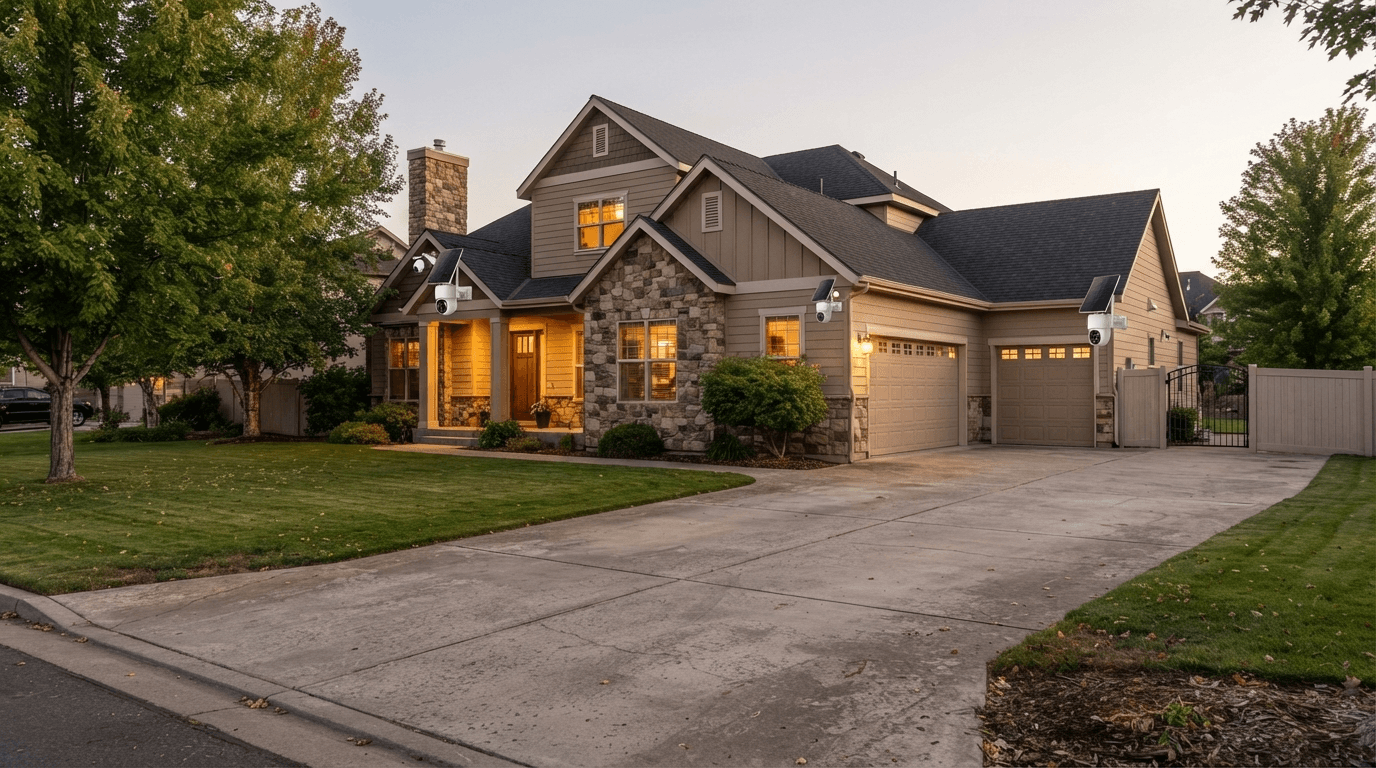
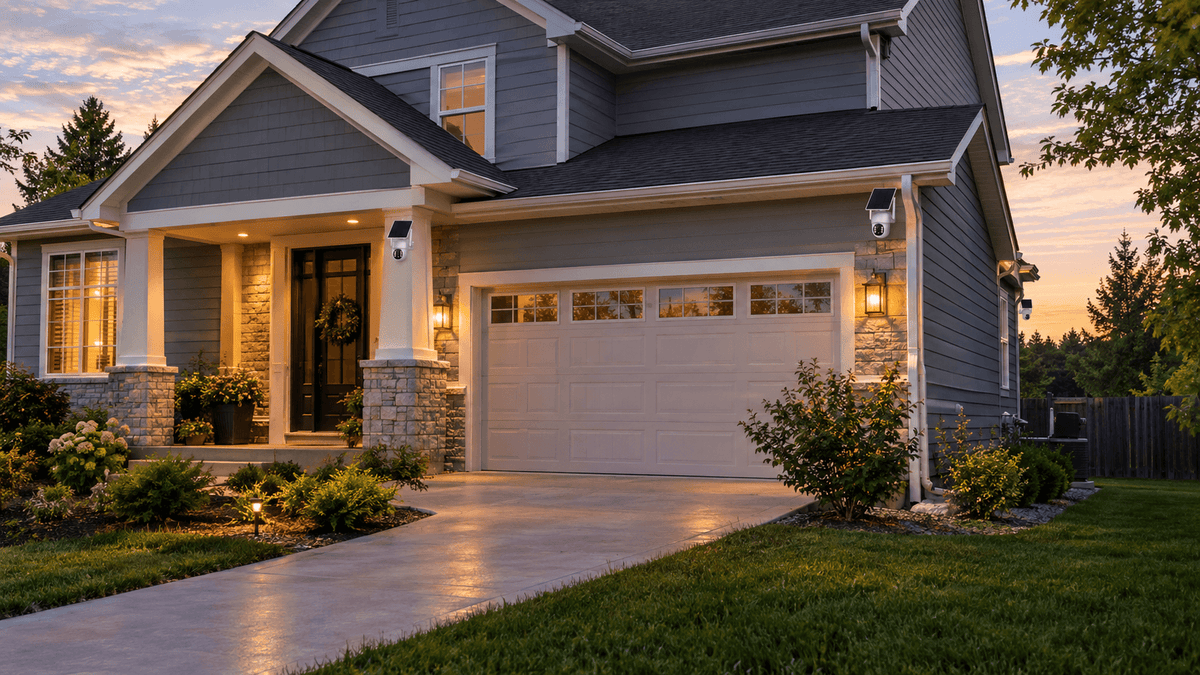
For locations without convenient access to electrical power, a solar security camera can provide a flexible solution.
Solar-powered security cameras typically charge their batteries during the day and use stored energy at night.
Because night vision requires additional processing and illumination, power management is especially important for solar cameras.
A well-designed solar security camera can automatically wake up when motion is detected, record nighttime activity, and return to a low-power state when no activity is detected.
This can make solar cameras particularly useful for:
- Remote properties
- Gardens
- Farms
- Driveways
- Vacation homes
- Construction sites
- Sheds and outbuildings

How to Choose the Best Night Vision Security Camera
When shopping for an outdoor security camera with night vision, don't focus on one specification.
Instead, consider the complete system.
1. Check the Night Vision Technology
Determine whether the camera uses IR, color night vision, white-light illumination, or a combination.
2. Consider Your Lighting Conditions
A completely dark rural property may benefit more from strong IR night vision, while a residential driveway with street lighting may benefit from color night vision.
3. Check the Night Vision Range
Make sure the camera can cover the distance you actually need.
4. Consider Resolution
2K, 2.5K, and 4K security cameras can provide additional detail, especially when monitoring larger areas.
5. Look for Smart Detection
AI-powered person, vehicle, or motion detection can help reduce unnecessary alerts and make nighttime monitoring more useful.
6. Consider Power Options
For locations without an electrical outlet, a wireless solar security camera can eliminate the need for permanent power cables.
7. Think About Storage
Check whether the camera supports microSD cards, local storage, NVR storage, cloud storage, or a combination of options.
Final Thoughts
Good nighttime surveillance is about more than simply choosing a camera with "night vision."
IR night vision is an excellent choice for dark environments and can provide reliable black-and-white surveillance even when there is virtually no visible light. Color night vision can provide more visual information when sufficient ambient or supplemental light is available.
For homeowners and property owners, the best night vision security camera depends on the environment, required viewing distance, lighting conditions, power source, storage method, and type of activity being monitored.
If you need reliable nighttime protection for a driveway, backyard, farm, or remote property, choosing a camera with strong low-light performance and the right night vision technology can make a significant difference.
FAQ
Does security camera night vision work in complete darkness?
Yes. Security cameras equipped with infrared LEDs can capture footage in complete darkness by illuminating the scene with infrared light that the camera sensor can detect.
Is IR or color night vision better?
Neither is universally better. IR night vision is generally better for complete darkness, while color night vision can provide more visual detail when some ambient or supplemental light is available.
Do all security cameras have night vision?
No. Some basic cameras may perform poorly in darkness. If nighttime surveillance is important, look specifically for a security camera with IR or low-light night vision capabilities.
How far can a night vision security camera see?
Night vision range varies by model and environment. Many consumer cameras provide approximately 10–30 meters of nighttime visibility, but actual useful identification distance depends on lighting, weather, camera hardware, and the subject.
Are solar security cameras good at night?
Yes. Solar security cameras can record nighttime activity using battery power stored during the day. Motion detection and low-power operation can help extend battery life.

Leave a comment
This site is protected by hCaptcha and the hCaptcha Privacy Policy and Terms of Service apply.