
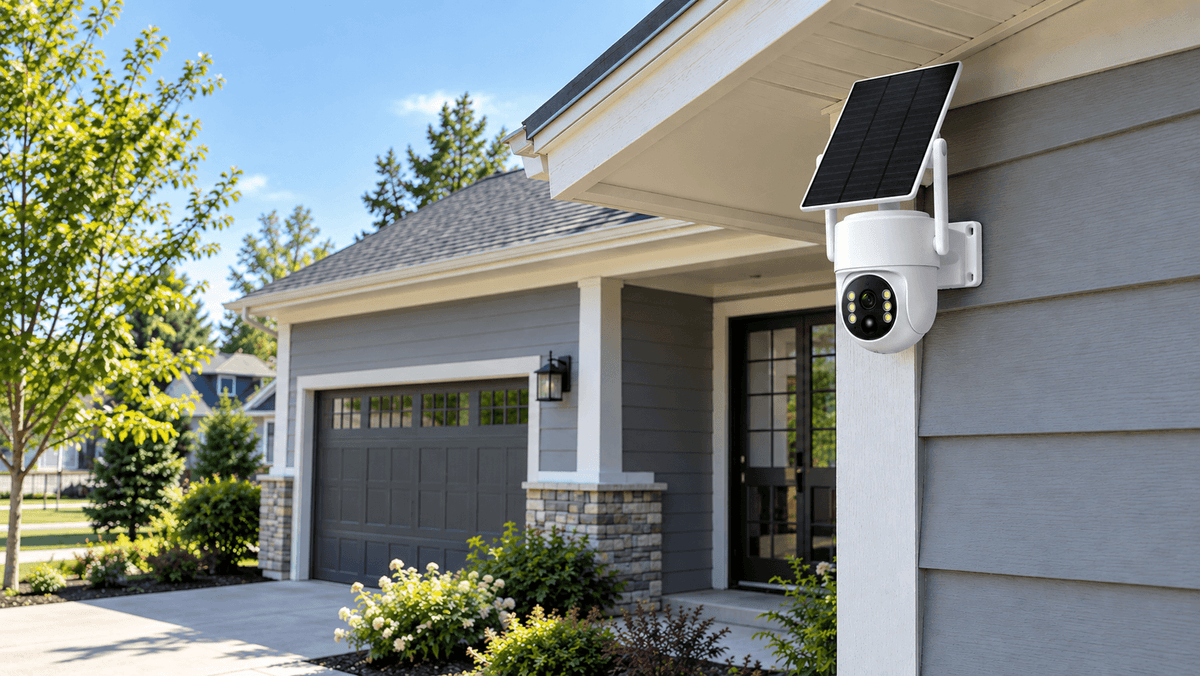
Choosing a security camera system for your home can be confusing, especially when you have to decide between wireless security cameras and wired security cameras.
Both options can provide reliable video surveillance, motion detection, night vision, remote monitoring, and other important home security features. However, the best choice depends on your property, installation requirements, power availability, network conditions, and how much flexibility you need.
So, is a wireless security camera system better than a wired system?
The answer is: it depends on your home and security needs.
In this guide, we'll compare wireless and wired security camera systems based on installation, power, WiFi connectivity, reliability, video storage, maintenance, scalability, and outdoor use. We'll also explain when a wireless security camera system may be the more practical choice—and when a wired system makes more sense.
What Is a Wireless Security Camera System?
A wireless security camera system transmits video without requiring a dedicated video cable between every camera and the recording device.
Many wireless cameras connect through WiFi, while cellular security cameras use a 4G LTE network. Some wireless outdoor security cameras are also powered by rechargeable batteries or solar panels.
A wireless camera system can be especially convenient for homes where running cables through walls, ceilings, or outdoor areas would be difficult.
Modern wireless security cameras may include:
- 2K or 4K video
- AI-powered detection
- Motion detection
- Color or infrared night vision
- Two-way audio
- Remote smartphone access
- Cloud or local storage
- Solar charging
- Wireless NVR connectivity
- 4G LTE connectivity
For example, a wireless security camera system such as the Camcamp SC43 combines wireless cameras with a dedicated NVR monitor, making it possible to monitor multiple cameras without running traditional video cables throughout the property.
What Is a Wired Security Camera System?
A wired security camera system uses physical cables to connect cameras to power sources and/or recording equipment.
Common wired security systems include:
- PoE security camera systems
- Ethernet-based IP cameras
- Analog CCTV systems
- Wired NVR security systems
One major advantage of a wired system is that the physical connection can provide a stable communication path between the camera and recorder.
For larger homes, businesses, warehouses, and properties where permanent installation is acceptable, wired security cameras can be a practical long-term solution.
However, installation can require more planning.
Cables may need to be routed through walls, ceilings, attics, conduit, or exterior surfaces. This can increase installation time and may require professional installation depending on the property.
Wireless vs Wired Security Cameras: Quick Comparison
| Feature | Wireless Security Camera | Wired Security Camera |
|---|---|---|
| Installation | Easier and more flexible | More complex |
| Cable requirements | Minimal | Extensive |
| Relocation | Easy | More difficult |
| WiFi dependence | Often yes | Usually no |
| Power options | Battery, solar, or outlet | Usually continuous wired power |
| Long-term stability | Depends on wireless environment | Generally consistent connection |
| Installation cost | Often lower | Can be higher |
| Expansion | Flexible | Requires additional cabling |
| Outdoor installation | Very convenient | Requires cable routing |
| Best for | Homes, rentals, DIY installations | Permanent installations |
Neither technology is automatically better for every property. The key is understanding how each system works in real-world conditions.
1. Installation: Wireless Cameras Are More Flexible
Installation is one of the biggest differences between wireless and wired security cameras.
With a wired security camera system, each camera typically needs physical cables routed to the appropriate location. Depending on the system, these cables may carry power, data, or both.
This can be ideal during new construction or major renovations, when cables can be installed inside walls.
For an existing home, however, cable installation can be much more complicated.
A wireless outdoor security camera can be installed in locations where running cables would be inconvenient. This makes wireless systems attractive for garages, driveways, gardens, backyards, entrances, and other outdoor areas.
Wireless cameras are also easier to reposition if your surveillance needs change.
Winner for installation flexibility: Wireless

2. Power: Wireless Does Not Always Mean Wire-Free
One common misconception is that every wireless security camera is completely wire-free.
That's not necessarily true.
"Wireless" usually refers to the video or network connection, not necessarily the power supply.
Some wireless cameras use rechargeable batteries. Others use solar panels, while some wireless cameras still need to be connected to an electrical outlet.
For a camera designed for continuous power, the camera can be connected to a nearby power outlet with a thin white power cable, providing continuous power while keeping the installation visually clean.
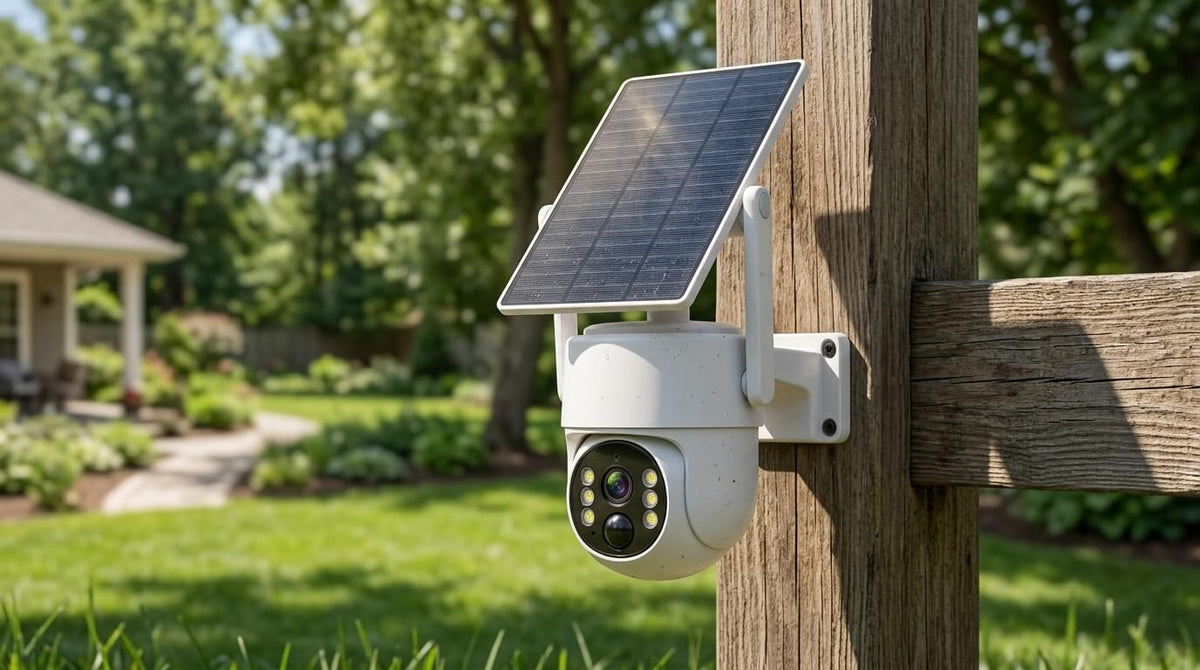
Solar-powered security cameras provide another option. A solar panel can continuously recharge the camera's battery during daylight hours, reducing the need for frequent manual charging.
This makes solar security cameras particularly useful for outdoor locations without convenient electrical outlets.

3. Reliability: Wired Connections Have an Advantage
A major reason homeowners choose wired security cameras is connection reliability.
A wired IP security camera does not normally depend on WiFi signal strength between the camera and network.
This can be particularly useful in large homes, buildings with thick walls, or areas where wireless interference is common.
Wireless cameras can still provide reliable performance, but their performance may depend on:
- WiFi signal strength
- Distance from the router or NVR
- Walls and physical obstacles
- Wireless interference
- Network congestion
This doesn't mean wireless systems are unreliable. Modern wireless security camera systems can work very well when properly installed.
However, if your priority is a permanent connection with minimal dependence on wireless signals, a wired system may be more suitable.

4. Remote Monitoring: Both Can Provide Smartphone Access
Both wireless and wired security cameras can support remote viewing.
Depending on the system, you may be able to watch live video, receive motion alerts, review recordings, and manage camera settings through a smartphone app.
A wired camera system can connect to your home router or internet connection, while a wireless camera may connect through WiFi or cellular networks.
For properties without reliable broadband internet, a 4G LTE security camera can be especially useful.
Cellular security cameras use a mobile network rather than relying on your home's WiFi connection. This makes them suitable for locations such as:
- Rural properties
- Farms
- Construction sites
- Vacation homes
- Barns
- Hunting properties
- Remote outdoor areas
5. Storage: NVR, Local Storage, or Cloud?
Video storage is another important factor when choosing a home security camera system.
Wired and wireless systems can both support different storage methods.
NVR Storage
An NVR security camera system stores recordings on a network video recorder. This can provide centralized storage for multiple cameras.
Local Storage
Some cameras support microSD cards, allowing recordings to be stored directly on the camera.
Cloud Storage
Cloud-connected cameras can upload recordings to remote servers, allowing you to access footage from different locations.
Each storage method has different advantages in terms of accessibility, capacity, privacy, and recurring costs.
If you want a system designed for centralized local recording, a wireless NVR system can combine the installation flexibility of wireless cameras with dedicated local storage.
6. Outdoor Security: Which System Is Better?
For outdoor surveillance, the choice often comes down to the property itself.
A wired system can work extremely well if cables can be safely routed to every camera location.
But wireless outdoor security cameras can simplify installation around:
- Driveways
- Backyards
- Gardens
- Side entrances
- Detached garages
- Sheds
- Workshops
Solar-powered wireless cameras can be even more convenient when there is sufficient sunlight and no convenient electrical outlet.
For outdoor locations where neither WiFi nor traditional power is practical, a 4G solar security camera can provide another solution.

7. Maintenance and Long-Term Use
Maintenance requirements depend on the type of wireless camera.
Battery-powered cameras require periodic charging. Solar-powered cameras can reduce manual charging, but the solar panel should remain relatively unobstructed by dirt, leaves, snow, or other objects.
Wired cameras generally don't require battery charging, which can make them attractive for permanent installations.
However, wired systems may be more difficult to modify later. If you want to move a camera, you may need to reroute cables.
Wireless systems generally offer more flexibility for changing camera locations.
8. Wireless vs Wired: Which One Should You Choose?
Instead of asking which technology is universally better, consider your specific installation.
Choose a wireless security camera system if you:
- Want a simpler DIY installation
- Don't want to run long cables
- Live in an existing home
- Need flexible camera placement
- Want to monitor outdoor areas
- Prefer solar or battery power
- Need to expand your system later
- Want a wireless NVR system
Choose a wired security camera system if you:
- Want a permanent installation
- Have easy access to cable routes
- Prioritize a consistent physical network connection
- Need continuous power without batteries
- Are building or renovating a property
- Want a traditional NVR or PoE security system
For many homeowners, the decision ultimately comes down to installation flexibility versus physical connectivity.
Wireless Security Camera System vs Wired: Final Thoughts
There is no single security camera system that is perfect for every home.
Wireless security camera systems offer flexibility, easier installation, and a wide range of power options, including battery and solar. They can be particularly useful for outdoor surveillance and existing homes where installing cables is difficult.
Wired security camera systems offer a more permanent installation and can provide a stable physical connection without relying on wireless communication between cameras.
For homeowners looking for an easier installation, flexible placement, and modern outdoor surveillance features, a wireless system such as a Camcamp wireless security camera system can be worth considering.
The most important step is to evaluate your property first: check your WiFi coverage, available power sources, camera locations, recording requirements, and whether you need continuous monitoring.
Once you understand those requirements, choosing between wireless and wired security cameras becomes much easier.

Leave a comment
This site is protected by hCaptcha and the hCaptcha Privacy Policy and Terms of Service apply.